


























Festivals & Events
Chagu Chagu Umakko Festival チャグチャグ馬コ
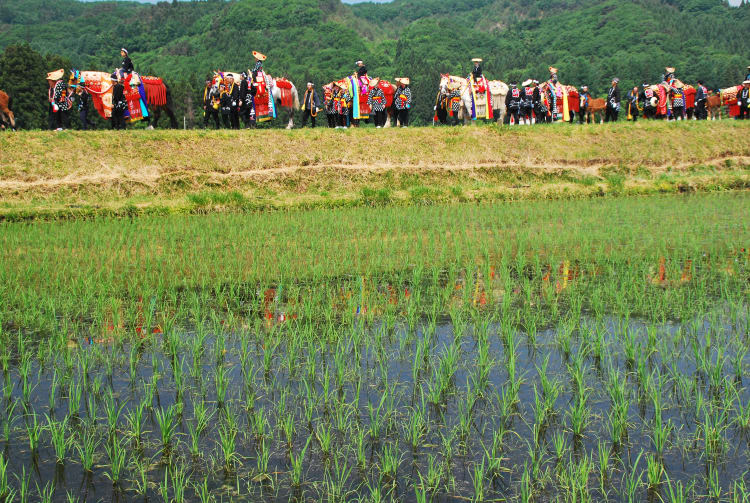
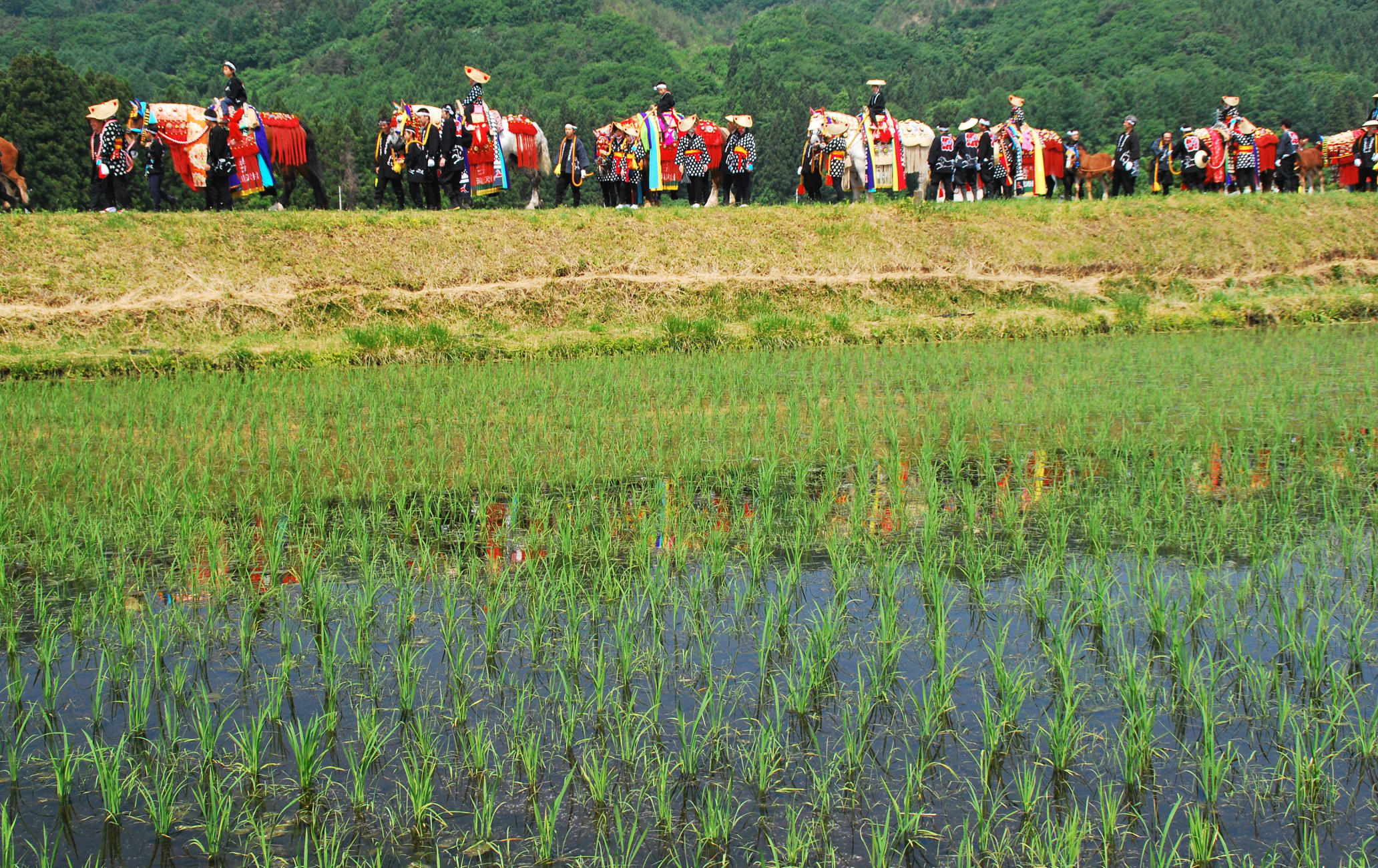
Gorgeous horses and ringing bells at the Chagu Chagu Umakko Festival
The sound of ringing bells takes over Morioka 
 during the Chagu Chagu Umakko Festival in June. Watch as 100 horses clad in brightly colored harnesses and bells parade from Takizawa to Morioka with small children mounted on their backs.
Don't Miss
- The festival as it gets started in Takizawa
- The costumes, which are made by individual households
How to Get There
The festival is accessible by shuttle from Morioka Station.
Take the Tohoku Shinkansen to Morioka Station. From there, a special shuttle bus is available on the day of the festival from bus terminal 16 in front of the station.
Beast of burden
Since ancient times, Iwate Prefecture has been well-known for horse breeding. Humans and horses have always lived in harmony in Iwate , often under the same roof.
The Chagu Chagu Umakko Festival began about 200 years ago so that farmers could give their horses a day off after the rigors of rice-planting and so they could pray for their health at the shrine.


Follow the historic path
To get a feel for what the festival was like 200 years ago, make a trip to Takizawa. The horses depart from Onikoshi Sozen-jinja Shrine, dedicated to the deity of horses, and head for Hachiman Shrine in Morioka .
Bells, bells, bells
During the festival, the sound of bells takes over the city. Every time a horse takes a step forward, the bells ring "chagu chagu," hence the name of the festival.
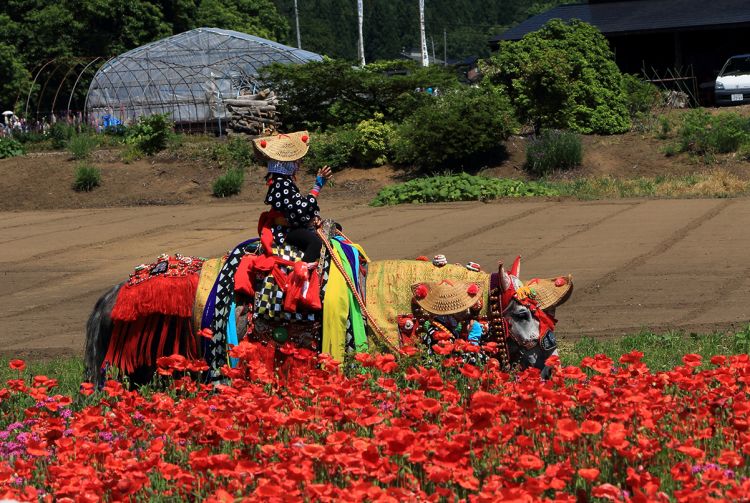
The horses are adorned with up to 700 bells. One of the more unique bells is the donut-shaped bell around the horse's neck; originally it was used to ward off wolves.

A horse at the festival decorated with bells
Meeting the stars
There are two resting points where you can mingle with the horses, feed them carrots, take pictures and admire their costumes and bells. Just remember to never stand behind a horse, use a flash, or make a loud noise, as these actions could startle it.

A horse taking a break
After the festival is over, you can check out Hachiman Shrine, Iwate Park or one of the many other sights in Morioka .
The latest information may differ, so please check the official website
* The information on this page may be subject to change due to COVID-19.
Recommended for You